
Recognizing and Responding to Anaphylaxis
Anaphylaxis (pronounced an-uh-fil-LAX-is) is a severe, potentially life-threatening allergic reaction. Symptoms can affect several areas of the body, including breathing and blood circulation.
Food allergy is the most common cause of anaphylaxis, although several other allergens—such as insect stings, medications, or latex—can be triggers. Although rare, anaphylaxis can be triggered by exercise alone or exercising after eating a problem food.
Register Now
This FREE course is available in English and Spanish through the Food Allergy Academy, FARE’s learning management system. Click here for the registration page for the Food Allergy Academy platform. Once you have registered, search for the training course or content you are looking for.
Please note: If you are in New York state, take the New York State specific version of this course.
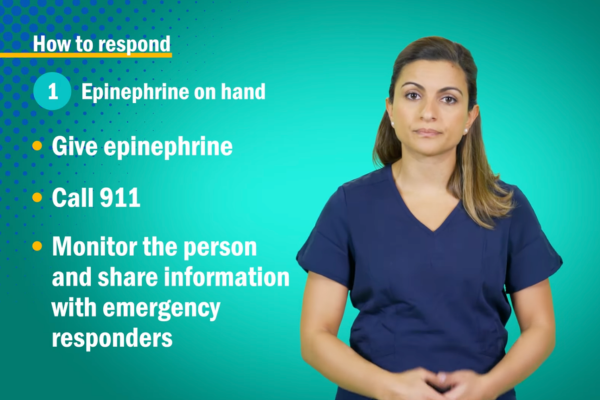
Epinephrine in Public Venues
States that allow public venues to keep undesignated epinephrine for use in an emergency require these venues to have staff trained in how to recognize and respond to anaphylaxis.
Save a Life: Recognizing and Responding to Anaphylaxis is currently approved to meet these requirements in Illinois, Michigan, and Arkansas.
In New York, Save a Life: Recognizing and Responding to Anaphylaxis, New York State specific, is approved to meet these requirements.
Courses can be accessed for free at FARE’s Food Allergy Academy.
Indemnity and Liability Concerns
States with these laws in place include indemnity protection for everyone from the public entity and staff to prescribers. In New York state, for example, the legislation states:
“Any person or entity that purchases, operates, facilitates implementation or makes available… an epinephrine auto-injector device…or a health care practitioner that prescribes, dispenses or provides an epinephrine auto-injector device under section three thousand-c of this article, shall not be liable for damages arising either from the use of that equipment by a person who voluntarily and without expectation of monetary compensation renders first aid or emergency treatment at the scene of an accident or medical emergency, or from the use of defectively manufactured equipment; provided that this subdivision shall not limit the person’s or entity’s, the emergency health care provider’s, or other health care practitioner’s liability for his, her or its own negligence, gross negligence or intentional misconduct.”