What Is Fish Allergy?
Fish is one of the most common food allergies with a prevalence of 1% in the U.S. population. In one study, salmon, tuna, catfish, and cod were the types of fish people reported the most allergies to.
When a person with an allergy to a particular fish is exposed to that fish, proteins in the fish bind to specific IgE antibodies made by the person’s immune system. This triggers the person’s immune defenses, leading to reaction symptoms that can be mild or very severe.
Fish and shellfish are not related. Being allergic to one does not always mean that you must avoid both, though care is needed to prevent cross-contact between fish and shellfish. Discuss this with your allergist to make sure the right food restrictions are implemented.
About 40 percent of people with fish allergy experience their first allergic reaction as adults.
Allergic Reactions to Fish
Fish can cause severe and potentially life-threatening allergic reactions (such as anaphylaxis). Allergic reactions can be unpredictable, and even a small amounts of fish can cause a reaction.
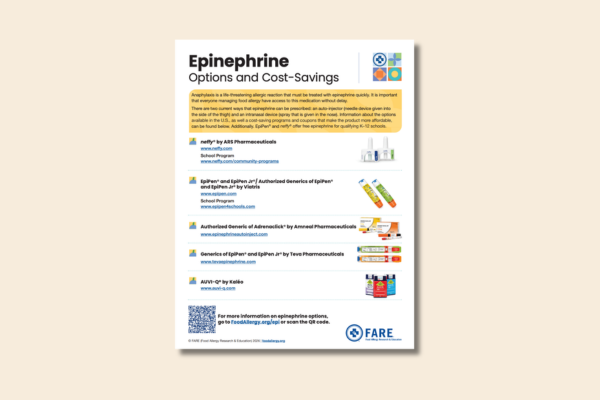
If you have a fish allergy, always keep an epinephrine delivery device with you. Epinephrine is the first-line treatment for anaphylaxis.
Avoiding Fish
To prevent a reaction, avoid all fish and fish products. Always read food labels and ask questions about ingredients before eating food that you have not prepared yourself.
Steer clear of seafood restaurants, where there is a high risk of food cross-contact. Being in an area where fish is being cooked can put you at risk, as fish protein can be in the steam.
Over half of people allergic to one type of fish are also allergic to others. Your allergist will usually recommend you avoid all fish. If you are allergic to a specific type of fish but want to eat other fish, talk to your doctor about further allergy testing and recommendations.
Fish is one of the nine major allergens that must be listed in plain language on packaged foods sold in the U.S., as required by federal law, either within the ingredient list or in a separate “Contains” statement on the package. There are more than 20,000 species of fish. Although this is not a complete list, allergic reactions have been commonly reported to:
- Anchovies
- Bass
- Catfish
- Cod
- Flounder
- Grouper
- Haddock
- Hake
- Halibut
- Herring
- Mahi mahi
- Perch
- Pike
- Pollock
- Salmon
- Scrod
- Sole
- Snapper
- Swordfish
- Tilapia
- Trout
- Tuna
Also avoid these fish products:
- Fish flavoring
- Fish gelatin (made from the skin and bones of fish)
- Fish oil
Some Unexpected Sources of Fish
- Barbecue sauce
- Bouillabaisse
- Caesar dressing
- Caponata, a Sicilian eggplant relish
- Imitation or artificial fish or shellfish (e.g., surimi, also known as “sea legs” or “sea sticks”)
- Worcestershire sauce
Allergens are not always present in these foods and products, but fish can appear in surprising places. Again, read food labels and ask questions if you’re ever unsure about an item’s ingredients.
What About Carrageenan or Iodine?
Carrageenan, or “Irish moss,” is not fish. It is a red marine algae used as an emulsifier, stabilizer and thickener in many foods, like dairy foods. It is safe for most people with food allergy.
Fish allergy is sometimes confused with iodine allergy because fish is known to contain the element iodine. But iodine is not what triggers the reaction in people who are allergic to fish. If you have a fish allergy, you do not need to worry about cross-reactions with iodine or radiocontrast material (which can contain iodine and is used in some radiographic medical procedures).