Clinical Research and Food Allergy
Advancing Discovery Together
Clinical research is essential to improving the prevention, diagnosis, treatment, and understanding of food allergy and related conditions. Every medical advance used in clinical care begins with research involving patients, clinicians, and scientists working together.
At FARE, we are committed to helping patients and families understand clinical research so they can make informed decisions about participation and engagement.
What Is Clinical Research?
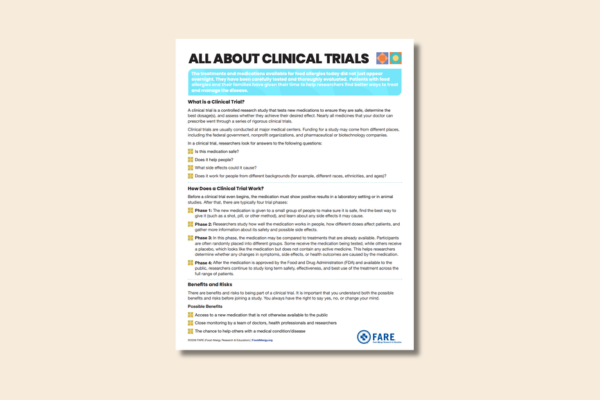
Clinical research is the study of health and disease in people. It helps researchers understand how conditions develop and how to improve care.
In food allergy, clinical research may include:
- Observational studies on disease patterns and outcomes
- Prevention and early-life exposure studies
- Research on diagnostic tools and biomarkers
- Studies of new and existing treatments
- Quality of life and patient experience research
- Long-term follow-up studies
Clinical research follows strict ethical and scientific standards to protect participants and ensure reliable results.
Why Clinical Research Matters
Clinical research has transformed food allergy care and continues to drive progress toward better outcomes. It helps:
- Improve understanding of the immune mechanisms behind food allergy
- Guide best practices for prevention and management
- Improve diagnostic accuracy
- Inform the development of new therapies, including biologics and immunotherapies
- Advance safer and more effective treatment strategies
Participation in clinical research helps generate knowledge that benefits the entire food allergy community.
Types of Clinical Research
Clinical research includes a range of study types:
Registry Studies
Long-term data collection efforts that track disease patterns, treatment use, and outcomes over time. These studies do not involve taking an investigational treatment; rather, participation typically involves completing questionnaires or surveys.
Observational Studies
Studies that observe health outcomes without assigning or testing specific treatments.
Interventional Studies
Studies that evaluate new treatments, therapies, or procedures to determine safety and effectiveness.
Participant Safety and Protections
Participant safety is the highest priority in clinical research. All studies must follow ethical guidelines and regulatory requirements designed to protect individuals.
Key safeguards include:
- Informed consent, ensuring participants understand the study before enrolling
- Independent review by Institutional Review Boards (IRBs) or an ethics committee
- Ongoing safety monitoring throughout the study
- Data privacy and confidentiality protections
- The right to withdraw from a study at any time
Participants receive clear information about:
- Study purpose and procedures
- Potential risks and benefits
- Time commitment and expectations
- Any costs or reimbursements associated with participation
Questions to Ask About Clinical Research
If you are considering participation, helpful questions include:
- What is the goal of this research?
- What will I be asked to do?
- What are the potential risks and benefits?
- How long will the study last?
- Will this affect my current care or medications?
- What protections are in place for my safety and privacy?
- Who can I contact with questions during the study?
Diversity and Inclusion in Clinical Research
Food allergy affects individuals across all ages, backgrounds, and communities. Inclusive participation in clinical research is essential to ensure that findings and treatments are applicable to everyone.
FARE is committed to advancing equitable access to research opportunities and supporting representation across all populations.
How FARE Helps Advance Research
Join the FARE Patient Registry
The FARE Patient Registry is a secure database that allows people with food allergy to help advance research by sharing their experiences – quickly, conveniently and privately. The Registry is sponsored by FARE on behalf of the 33 million Americans who have food allergy. Join the more than 14,000 individuals and families who are sharing their food allergy stories to speed the search for new treatments and improve patient care.
Find a Clinical Trial
FARE is pleased to partner with Carebox to assist food allergy patients and families in locating research opportunities and treatment options that may only be available through clinical trials. Carebox is a free and confidential service and allows users multiple ways to search for and find potential research studies. You can fill out a questionnaire, call a toll-free number to speak with a representative, or fill out a form and someone will contact you.