Overview of FAMS: Expert Recommendations
This slide deck provides a brief overview of the FAMS Expert Recommendations and will help you to put the suggestions quickly and successfully into practice. Download the slide deck below to use as a training aid for your school.
Download the slide deck in English.
Download the slide deck in Spanish.
FAMS: Expert Recommendations—Resources for K–12 Schools
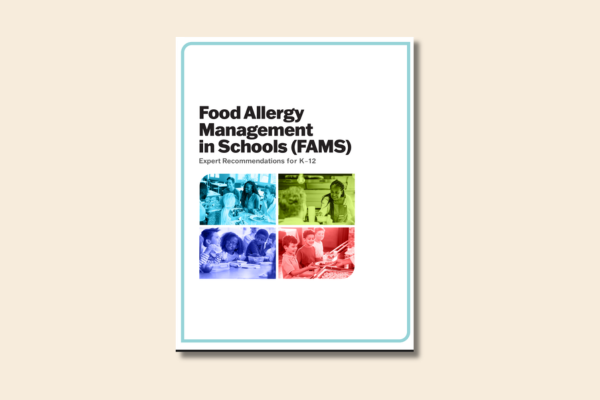
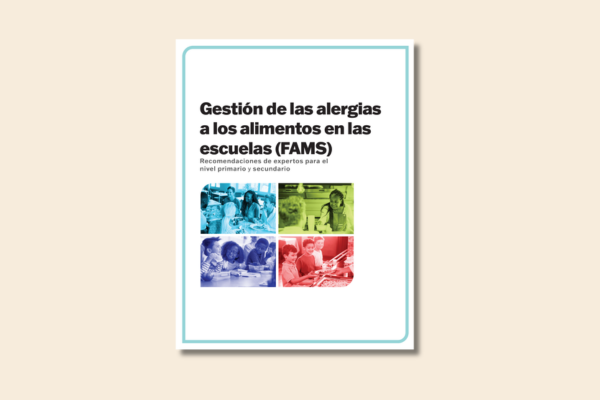
FAMS: Expert Recommendations document
This document provides specific and doable recommendations for creating a food allergy safe school, including practical guidance on educating and training school personnel, preventing allergen exposure, preparing for emergencies, and how to communicate and collaborate for success. They were prepared by FARE in close collaboration with representatives from multiple organizations who were part of the Food Allergy Management in Schools Advisory Council, listed below.
NOTE: The FAMS Expert Recommendations are intended to complement the 2013 Voluntary Guidelines for Food Allergies in Early Care and Education Programs.
Webinar Series
This three-part webinar series offers school professionals essential knowledge and actionable strategies to help confidently support students with food allergy.
Panelists: Kelly Cleary, MD, FAAP, Liz Dixon, MS, Linda Neumann, RN, PLNC, and Michael Pistiner, MD, MMSc, FAAP
Keeping Students Safe and Included (KSSI) Training
This free online course is designed to help administrators, school staff, and parents become better prepared to manage students with food allergies and respond to food allergy emergencies. Take this course to learn more about how to best protect and keep students safe and included. This resource has been independently reviewed and validated to make sure that it aligns with and reflects the recommendations included in the FAMS: Expert Recommendations for K–12 published in 2024.
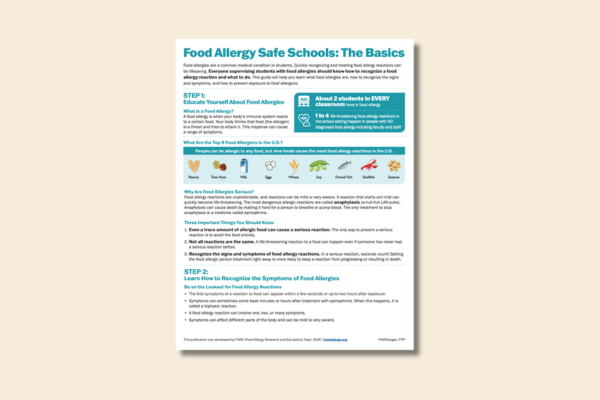
Food Allergy Safety Basics Handout for Volunteers & Contractors
This simple handout is designed to provide the food allergy safety basics for volunteers and contractors who may be in the school and interacting with students for a brief time. For example, this might be helpful for a parent chaperoning a school trip, or a substitute teacher coming in for a day. Download a copy and print copies to use as needed. This resource has been independently reviewed and validated to make sure that it aligns with and reflects the recommendations included in the FAMS: Expert Recommendations for K–12 published in 2024.
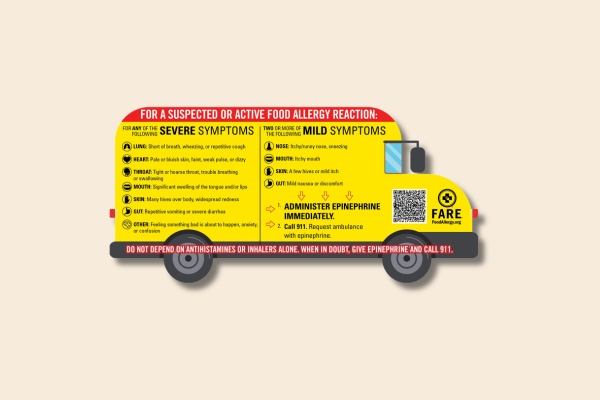
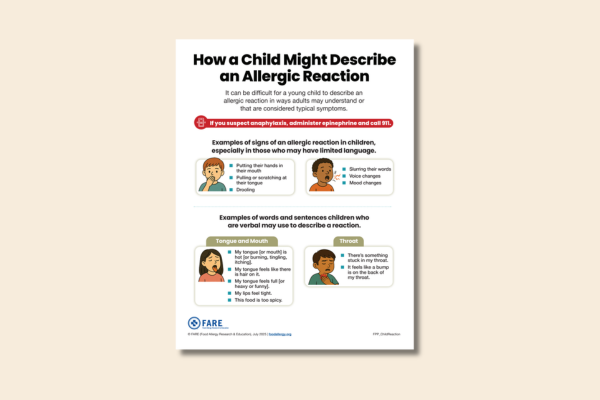
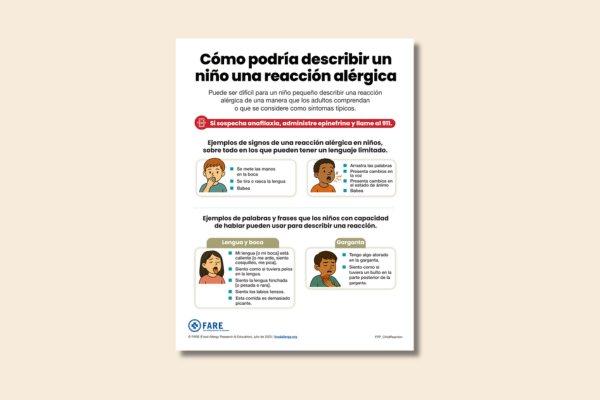
“How a Child Might Describe an Allergic Reaction” Poster
Print on 8.5″ x 14″ (legal size) paper
Children have unique ways of describing their experiences and perceptions, and allergic reactions are no exception. Precious time can be lost when adults do not immediately recognize that a reaction is happening or don’t understand what a child is telling them.
This resource was supported by Cooperative Agreement Number 6 NU38PW000050-01-01, funded by the Centers for Disease Control and Prevention, in partnership with the American Academy of Pediatrics. Its contents are solely the responsibility of Food Allergy Research and Education and do not necessarily represent the official views of the American Academy of Pediatrics or the Centers for Disease Control and Prevention.